
 info@apippress.com
 +86 18163351462 (WhatsApp)
 +86 182 8014 0209
Article Content
Introduction
The significance of preserving 20th-century architectural heritage emerges as a crucial challenge in contemporary contexts. This heritage, a testament to intense technological innovation and a radical shift in architectural conception, constitutes a valuable resource that demands a meticulous and forward-thinking approach to its safeguarding and enhancement. The need to adapt these buildings to the evolving demands of society without compromising their authenticity necessitates a re-evaluation of conservation strategies that can no longer be confined to material protection alone but must integrate interdisciplinary methodologies capable of managing transformation.
The international landscape underscores the inherent complexity of this issue, shaped by the necessity of engaging with high-quality architectural works that, belonging to a relatively recent past, have not always been adequately studied or appreciated. Until recent times, the chronological factor alone seemed sufficient to determine the importance and value of an architectural work [1]. However, despite its global recognition, 20th-century architecture remains at risk in multiple ways: ideological, moral, and material [2].
The principal challenge lies in preserving and promoting these works, which serve as fundamental testimonies of an era whose formal and structural innovations have significantly shaped the identity of urban landscapes and influenced contemporary perceptions and experiences of space. The Modern Movement, characterized by its drive for innovation and experimentation, has produced an extensive range of buildings that challenged traditional architectural conventions [3]. However, the pioneering nature of the technologies employed has often rendered these structures technically vulnerable, raising significant challenges for their long-term conservation. The conservation of 20th-century heritage has become one of the most challenging debates in the field of architectural preservation. Local and transnational organizations are increasingly committed to safeguarding and conserving modern heritage, recognizing its historical and cultural significance [4]. These initiatives have played a crucial role in bridging sectors within the architectural and conservation communities that, in the past, were not closely aligned.
A leading role in this context is played by DOCOMOMO, established in 1988. This organization has contributed to the creation of a network of scholars and professionals dedicated to promote modernist philosophy within contemporary architectural practice, while simultaneously striving to preserve the legacy of modernism. The debate on the conservation of modern heritage is articulated through different disciplinary perspectives, each highlighting key principles that inform research and practical interventions on 20th-century architecture. These principles translate into specific operational approaches and thematic analyses that guide restoration and conservation strategies [5].
A significant example of support for modern heritage conservation is provided by the Getty Foundation in Los Angeles through its Keeping It Modern program, which, since 2014, has funded research and restoration efforts for modernist buildings, demonstrating a concrete commitment to the preservation of 20th-century architectural heritage.
Today, the discourse on conservation extends beyond the mere physical and material maintenance of buildings; it also necessitates a critical reflection on their historical integrity and cultural significance. Many of these works remain subjects of debate and controversy within architectural criticism, often reduced to mere stylistic expressions rather than being fully appreciated for their innovative processes and the philosophical contributions they have made to the historical and artistic context in which they were conceived [6].
In the field of 20th-century architectural heritage conservation, musealization represents a highly relevant approach, as it facilitates public access to emblematic buildings, allowing them to be understood not only as architectural works but also as tangible testimonies of their time and the architectural ideals that inspired them. In this context, musealization emerges as a key strategy to ensure not only the physical preservation of buildings but also their accessibility, the interpretation of their historical and cultural significance, and their integration into contemporary society. A significant step in this domain was taken in the late 1990s with the establishment of the International Council of Museums (ICOM), an international committee aimed at setting standards and guidelines for the management and conservation of museum heritage. Subsequently, in 1998, with the growing awareness of the unique characteristics that distinguish house museums from the broader museum landscape, the ICOM International Committee for Historic House Museums (Demhist) was created. This committee has developed specific regulations for the conservation, restoration, and security of house museums, as well as overseeing event organization and visitor assistance, recognizing the importance of safeguarding these spaces as living testimonies of architectural and cultural history [7]. The masterpieces of the Modern Movement, and therefore those works whose architectural and artistic qualities have been widely recognized, constitute paradigmatic examples of how conservation and restoration can emphasize the authenticity and integrity of architectural heritage, as seen in the case of Le Corbusier’s Villa Savoye. Similarly, institutions such as the Van Gogh House Museum in the Netherlands, the Mozart House Museum in Vienna, and Villa Necchi Campiglio in Milan (Fig. 1) illustrate the significance of musealization not only in preserving buildings but also in their role in shaping cultural and historical narratives.
Through meticulous archival research and rigorous restoration practices, it is possible to preserve not only the physical appearance of buildings but also their original spirit and the vision of their creators. An integrated approach that combines historical research with cultural and architectural sensitivity ensures that architectural heritage, including Modern architecture, is not merely conserved but enhanced and appreciated for its unique contributions to our understanding of modern design and urbanism. Musealization thus becomes a means of keeping historical and cultural memory alive, offering the public the opportunity to immerse themselves in the essence of an era that has profoundly influenced our conception of space and architecture.
This approach can also be applied to broader contexts, encompassing entire residential complexes with the goal of recognizing the importance of preserving and interpreting architecture within a continually evolving urban environment. Analyzing the case of the Cité Frugès in Pessac opens an important window into the dynamics of heritage transformation and conservation, the role of the community, and the restoration practices that allow us to sustain the legacy of one of the most influential architects of the 20th century. This study demonstrates how architecture, far from being a static entity, can assume a broader significance, serving as a cultural touchstone that stimulates critical reflection and social interaction, thereby enriching the contemporary discourse on architecture and its role within society.
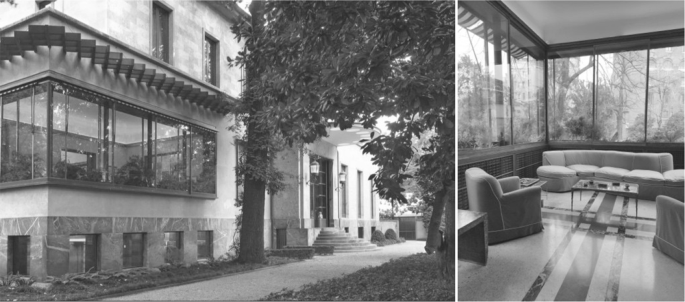
Examples of musealized residential architecture: Villa Necchi Campiglio in Milan, by the author
Cité Frugés in Pessac cité Frugés in Pessac
Between 1924 and 1927, Le Corbusier and Pierre Jeanneret embarked on the creation of an experimental settlement consisting of 51 residential units in Pessac, near Bordeaux, known as Cité Frugès [8]. This project can be considered a pioneering experiment both formally and technically, encompassing every aspect from the overall residential complex to the individual elements of furnishing. Under aesthetic, technical, methodological, and social perspectives, Cité Frugès exemplifies the interaction between modern architecture, industrial cities, international style, social welfare, and formal and functional transformation. It constitutes an ambitious and unprecedented venture in the history of worker housing, embodying a model of innovation and research promoted in the manifesto-book Vers une architecture [9], published in 1923, which left an indelible mark on the architectural landscape of the 20th century.
Today, this neighborhood is part of “The Architectural Work of Le Corbusier, an Outstanding Contribution to the Modern Movement”, a series of Le Corbusier’s works inscribed in 2016 on the UNESCO World Heritage List. Like other examples of urban complexes created during the same period in France and worldwide, this site has maintained its residential function over time, but, more so than others, it has undergone a significant transformation in the perception and recognition of its historical value, becoming an emblem of modern architectural heritage.
Originally conceived as an innovative housing solution for the working class, these buildings have become a symbol of Le Corbusier’s avant-garde vision. Their inclusion on the World Heritage List has solidified their importance not only as a testimony to a specific historical period but also as an example of urban design that has profoundly influenced modern architecture. Le Corbusier used Cité Frugès as a testing ground for his theories related to urban planning, social living, standardization, and the use of polychromy. In fact, when making a chronological comparison, it appears that the project in Pessac is the first in which he experimented with the use of polychromy on the facade, employing colors in a manner that evokes a strong psychological conditioning, suggesting the dematerialization of volumes.
The history of the QMF, or Quartiers Modernes Frugès, named after the client Henri Frugès, has been extensively studied and documented. Construction began in 1925, introducing a pioneering approach that combined industrialization, the use of reinforced concrete for the mass production of housing, and formal and spatial standardization, while avoiding repetition and monotony through the design of various modular types. This innovative construction method involved the use of a basic module of 5 × 5 m, which, combined with a sub-module of 5 × 2.5 m, allowed for the creation of different housing types with varying shapes and heights. The various types of dwellings, classified based on their specific characteristics, included Gratte-ciel, Quinconces, Jumelles, Isolée, Arcades, and Zig Zag (Fig. 2). Despite the standardization of construction elements, the distribution and volume of the dwellings remain diversified (Fig. 3), while standardization provides guidelines for composition without limiting the variety of forms.
The machine à habiter conceived by Le Corbusier were not mere artifacts but elements designed to generate a rhythmic urban space, enhancing the plastic and phenomenological qualities of color applied to architecture. This approach pursued a specific scenographic choreography, orchestrating architecture and urban space to configure the discursive essence of a new way of living.
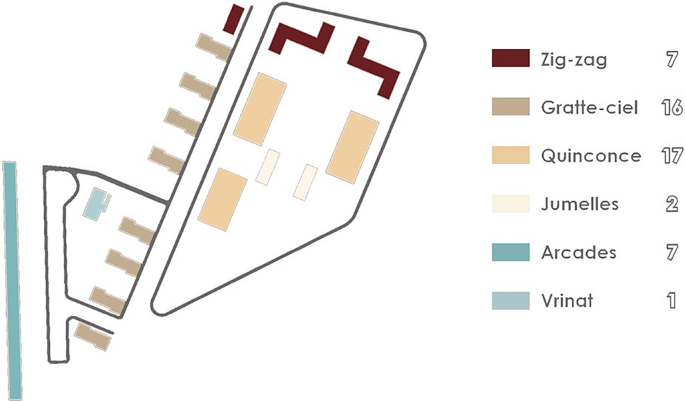
Various housing typologies and their spatial distribution within the neighborhood. Graphic elaboration by Pierri, A. under the author’s guidance
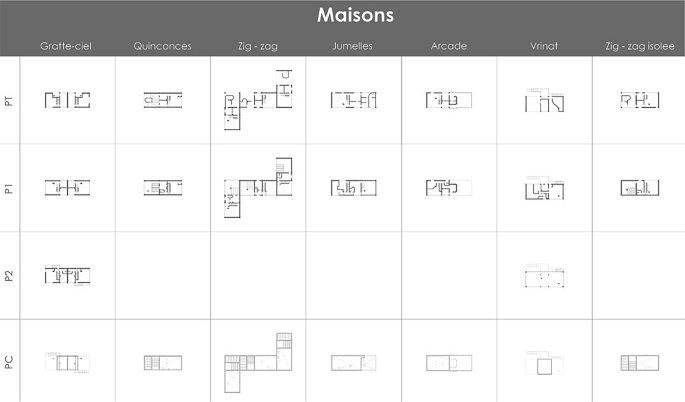
Floor plans of different Maisons typologies. Graphic elaboration by Pierri, A. under the author’s guidance
The result manifested as a conceptual and strategic unity that, starting from typological variability, generated an urban layout based on the concatenation of volumes and landscaped areas. Here, the air and light of the architectural space, together with the green space, created an environment that, according to Le Corbusier, was intended to satisfy the spiritual and emotional needs of humanity [10].
The years of construction for the Quartiers Modernes Frugès were characterized by significant difficulties. Le Corbusier faced numerous challenges, including the need to replace the originally contracted firm due to their incompetence in employing the “cement gun” technique (or canon à ciment) for pouring concrete [11]. The technical difficulties encountered led to a significant change in construction methods; indeed, in sectors C and D, a return to the more traditional method of using hollow concrete block walls was made.
These technical adjustments, along with operational challenges, had a substantial impact on Henri Frugès’s financial balance, to the extent that sectors A and B were never realized.
The completed houses in 1926 were occupied only a few years later, after the neighborhood was connected to the water supply. From the outset, the lack of maintenance led to degradation issues. Alterations to the facades and volumes quickly appeared, some of which are still visible today. Le Corbusier himself, after a visit to Pessac, expressed horror at the state of the neighborhood and the condition of certain houses, as documented in a letter from 1931 addressed to Henri Vrinat, the engineer of the neighborhood [12].
Despite being incomplete, the ongoing difficulties, and subsequent transformations, Cité Frugès remains in history as an experimental laboratory for formal and technical research at various scales, from the urban component to the design of furnishings.
The recognition of historical value and the preservation process
The original project created for Henri Frugès has undergone significant compromises due to alterations made by the residents of the housing units. These modifications affected the facades, involving volumetric additions and changes to the original paint colors [13]. However, despite these changes, the neighborhood still retains tangible signs of Le Corbusier’s intentions for a social city.
The modifications made spontaneously by the inhabitants have, in some cases, altered the original characteristics of the buildings but have also testified to the vibrant and dynamic nature of this heritage, raising fundamental questions about the most appropriate conservation strategies. Starting from the mid-1960s, shortly after Le Corbusier’s death, the archives of Bordeaux Métropole and the DRAC – Directions Régionales des Affaires Culturelles d’Aquitaine, revealed an intention to protect this work. Consequently, a debate emerged regarding its heritage value, leading to concrete actions by the municipality of Pessac aimed at preserving the neighborhood by limiting transformations carried out by the residents. In February 1967, the mayor of Pessac requested protection for the architecture as a Monument Historique, highlighting its historical significance and illustrious author. However, it was only with the ruling on March 2, 1976, that the complex was inscribed in the inventory of the Department’s inventory of picturesque sites under the name “Cité Le Corbusier.”
The first phase of protective actions culminated in 1980 with the initial recognition of one of the houses as a Monument Historique, at the request of the owner, followed shortly by the inscription and classification of other houses, also at the request of private individuals.
In 1982, a significant study of the neighborhood was initiated by the Aquitaine Region and the municipality of Pessac [14], which resulted in the creation of the ZPPAUP (Zone de Protection du Patrimoine Architectural, Urbain et Paysager) in 1998. This initiative aimed to ensure the protection of the architectural and urban heritage while enhancing neighborhoods and sites that needed safeguarding for historical or aesthetic reasons. This urban-scale preservation tool posed the question of how to safeguard the QMF from degradation and transformations that mutilated the original work, without alienating a population that wished to live there not as if in a museum, but as in a vibrant place, maintaining and improving it. This task proved challenging in a context where the volumes of the houses and their transformations had significantly compromised the readability of the work.
In 2016, Cité Frugès was inscribed on the UNESCO World Heritage List along with sixteen other works or sites across seven countries and three continents, namely Argentina, Belgium, France, Germany, Switzerland, India, and Japan. This recognition of Cité Frugès in its entirety finally triggered, in 2019, the protection of all the maisons.
Objectives and methods
The research developed in this article originates from the need to critically reflect on the valorization of modern architectural heritage and, more specifically, on the processes of musealization and their broader, using the Cité Frugès in Pessac as a case study. Some of the key objectives underlying this work have already been introduced in the initial sections, where the architectural and historical significance of the site was examined, along with its complex evolution into a formally recognized heritage asset. This study seeks to deepen the understanding of how this architectural works can be interpreted, adapted, and re-presented in contemporary contexts.
This study was developed based on extensive historical and archival research, enabling the understanding and subsequent reconstruction of the project. The analysis of bibliographic sources, such as printed texts and contemporary newspapers, provided various insights into the historical events, structure, and transformations of the Pessac neighborhood. The investigation aimed to acquire knowledge of the main cultural milestones and the theoretical foundations relevant to the topic, through bibliographic and documentary research of published sources, outcomes of research and thematic studies, and current documentation, preservation, and enhancement programs concerning the cultural heritage of the twentieth century, with particular attention to Le Corbusier’s work.
The research primarily took place at specialized study and research centers, including the BNF – Bibliothèque Nationale de France– Richelieu and François-Mitterrand, the library of the Cité de l’Architecture et du Patrimoine, the media library of the ÉNSA Versailles, the library of the Cité Internationale Universitaire de Paris, the Sainte-Geneviève Library, the public information library of the Centre Pompidou, and the Fondation Le Corbusier.
The results obtained from this initial phase led to the assimilation of key investigative materials concerning cultural, architectural, technological, and evolutionary aspects, thus providing valuable references for the research and thoroughly defining the general approach.
The second phase focused on analyzing the data collected in the first phase, conducting more targeted investigations into specific areas. The elements of inquiry were directed towards understanding the case study, its distinctive characteristics, and recurring patterns in forms, typologies, and construction technologies, as well as its conservation status and evolutionary trajectory, identifying the main purposes for transformation. Naturally, a site visit to Pessac was conducted, beginning at the maison témoin, the only house accessible to the public, which has undergone a series of modifications that have significantly altered the original dwelling.
The surveying campaigns and field data collection allowed for the identification of the distinctive elements of this architectural production and the definition of the main forms of alteration and tampering, providing useful information for the subsequent formulation of preservation and enhancement programs. Interviews with stakeholders involved in managing the heritage of Cité Frugès, including one with M. Cyril Zozor, the head of Quartier Modern Frugès, underscored the necessity for the Ville de Pessac to reconsider the maison témoin to ensure it authentically reflects daily life within the home, as experienced a century ago.
The study focuses on proposing a compatible project for transforming the maison gratte-ciel into a house-museum. The museum aims to offer visitors an immersive experience that evokes the sensations and emotions one would have felt entering a typical residence from 1926. In this context, the musealization of the site emerges as an opportunity to reconcile heritage preservation with public enjoyment and understanding. Through the integration of exhibition pathways, educational activities, and cultural storytelling tools, Cité Frugès can be interpreted not only as an experimental housing model but also as an emblematic example of how modern architectural heritage can be preserved and reinterpreted over time.
The project as a tool for preservation: the Maison Gratte-Ciel
The project for the musealization of the maison gratte-ciel begins with an assessment of its current condition, leading to the identification of the primary forms of alteration and tampering, which will subsequently inform preservation and enhancement programs.
The analysis of degradation aims to delineate the critical issues affecting the surfaces or integral elements of the façade, focusing particularly on the three visible elevations of the residential unit. Despite undergoing restoration work in the 1980s, the maison gratte-ciel exhibits various forms of surface degradation and in particular, there have been observed phenomena such as chemical erosion, manifesting as washouts and deposits, alongside physical-mechanical actions like disintegration and detachment (Fig. 4).
Additional degradation factors include recent, low-quality alterations that not only cause visual damage but also worsen the structural and typological conditions of the building, as these modifications represent systems incompatible with the traditional structure. Such interventions fall under the category of “anthropic degradation” (Fig. 5) encompassing installations that negatively impact the building’s façade and volumes meant for incompatible functions. Furthermore, through direct visual surveys and careful analysis of photographs, fissures in the façade have been identified, indicating the presence of cracks, splits, or fractures in the structural material.
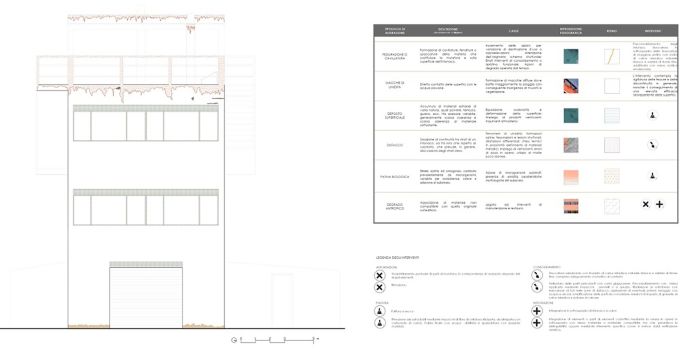
Example of mapping and analysis of degradation phenomena on the east façade of the Maison Gratte-ciel. Graphic elaboration by Pierri, A. under the author’s guidance
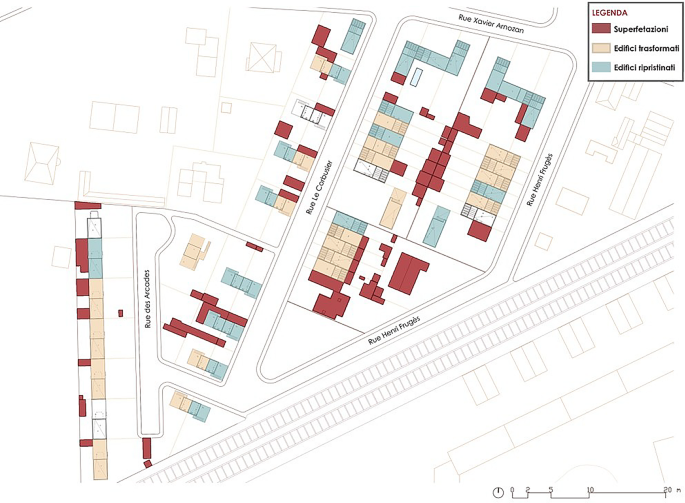
Site plan illustrating the transformed buildings, including additions, and those that have been restored. Graphic elaboration by Pierri, A. under the author’s guidance
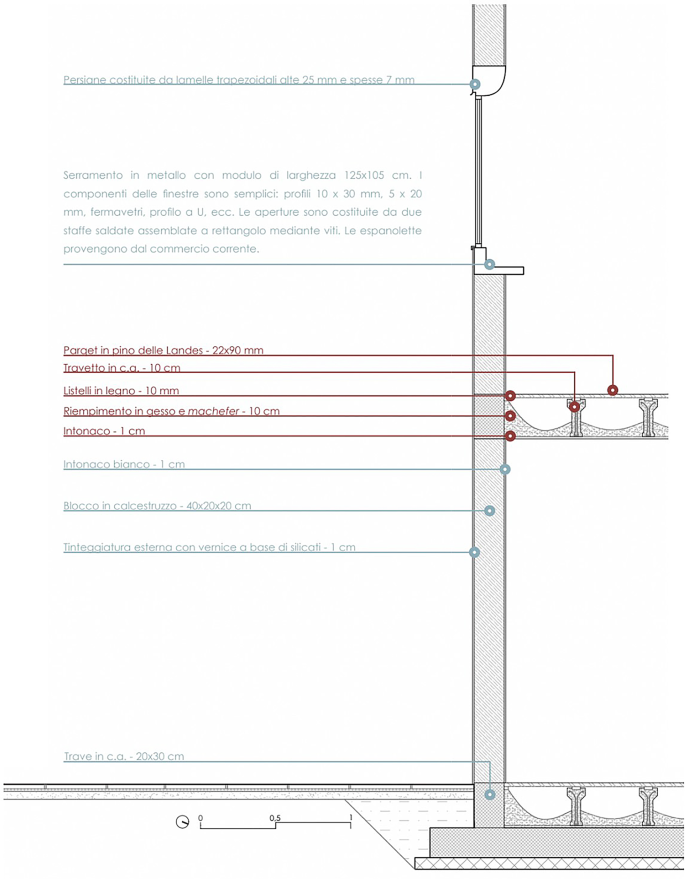
Technological section of the Maison Gratte-ciel. Graphic elaboration by Pierri, A. under the author’s guidance
Beyond the purely material and structural concerns (Fig. 6), the preservation of surfaces in Le Corbusier’s works is particularly complex and delicate, as it directly involves the theme of polychromy [15]. For the Swiss architect, polychromy was a fundamental tool for modulating the perception of architectural volumes, enabling them to either dissolve into the surrounding environment or acquire a stronger visual presence [16].
Cité Frugès serves as the first testing ground for the application of external polychromy by Le Corbusier. However, the original image of the neighborhood has been significantly compromised and altered by the interventions of its inhabitants, to the extent that, just a few decades after its construction, the neighborhood appeared almost unrecognizable compared to the initial design. In the absence of official guidelines for the preservation of the neighborhood, individual owners independently modified their homes, undermining the aesthetic and formal unity envisioned by Le Corbusier. With the subsequent establishment of the Zone for the Protection of Architectural, Urban, and Landscape Heritage (ZPPAUP), restoration and conservation efforts began to follow more coherent directives aimed at restoring the visual unity of the neighborhood, particularly through the reinstatement of original colors. Although the color palette used by Le Corbusier for the QMF is not precisely known, over the last forty years, a reference palette has been established based on extensive archival research and studies of the Salubra color range. This palette is now produced by KEIM, providing a scientific and historical basis for conservation interventions.
The process of musealization of an architectural work represents a complex and multidimensional challenge that extends beyond the mere preservation of physical structures. In the case of Le Corbusier’s works, this challenge is amplified, as the Swiss architect did not merely design buildings but entire integrated living systems, where every element, from furniture to interior spaces, contributed to the overall vision. Le Corbusier conceived architecture as a total art form, where the harmonization between the building envelope and the interior furnishings was essential to achieve a perfect synthesis of functionality and aesthetics. The furniture designed by Le Corbusier, often in collaboration with Pierre Jeanneret and Charlotte Perriand, were not mere decorative elements but integral parts of his architectural language, reflecting the principles of rationality, modularity, and modernism that characterized his vision. Therefore, analyzing and reinstating the original furnishings is crucial for fully understanding and preserving the conceptual and historical integrity of his works.
To thoroughly understand the type of furnishings utilized in the Pessac case study, all the floor plans of the different maisons were compared, highlighting the recurring use of the same types of furniture, albeit arranged in various configurations (Fig. 7). At this point, having access to photographs of the interiors of one of the houses, it was hypothesized that the furnishings identified in archival images were the same as those originally intended for the maisons gratte-ciel and consequently for the maison témoin designed by the architect.
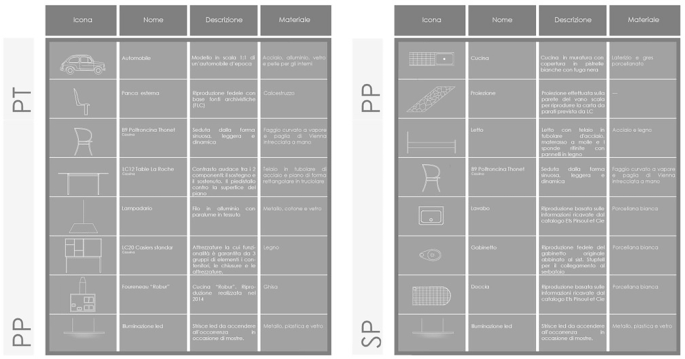
Identification of the original furnishings, floor by floor, within the Maisons. Graphic elaboration by Pierri, A. under the author’s guidance
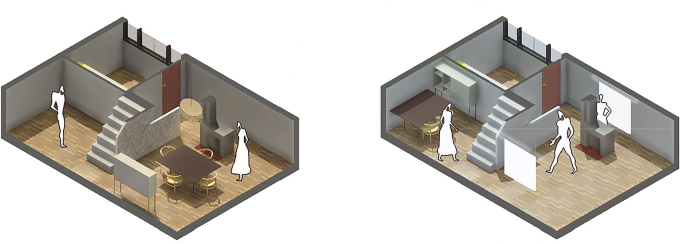
Project result, 3d elaboration by Pierri, A. under the author’s guidance
Conclusions
The aim of the project extends beyond the mere physical conservation of buildings and furnishings; it embraces a multidimensional approach that seeks to convey the cultural, historical, and artistic significance of the constructed environments. Musealization is not limited to passive preservation but extends to the dissemination of knowledge and the raising of public awareness regarding the importance of modern architecture.
The musealization project of the maison gratte-ciel (Fig. 8) is situated within this broader framework as an attempt to restitute to the public the experience of domestic space as it was conceived and inhabited in 1926, through an evocative and philologically grounded curatorial approach. This operation assumes a dual function, both conservative and communicative. It aims not only to preserve the tangible aspects of the architectural work, but also to convey the complexity of its historical, social, and aesthetic values. Particular attention is devoted to the reconstruction of original colors, furnishings, and technologies, in an effort to reactivate the deeper meaning of modern dwelling as envisioned by Le Corbusier and to render comprehensible the experimental character of the complex.
In light of these reflections, it becomes evident that conservation practices should increasingly embrace dynamic approaches that are attentive to historical stratification and capable of integrating educational and participatory forms of valorization. Musealization, thus understood not as a process of crystallization, but as a critical and interpretative tool, emerges as a meaningful act of memory transmission.
As the philosopher John Dewey suggests, a work of art does not live solely through its materiality; it is rejuvenated each time it is experienced and exists within individualized encounters [17]. This implies that architecture is not a static entity but a dynamic system: it regenerates and assumes new meaning whenever it interacts with those who observe and inhabit it.
In this continuous process of intuition and re-creation, the subsequent historical stratifications that accumulate upon the original work enrich it with new contents, meanings, and values, thereby broadening the significance of the piece. In this sense, the issue of preservation shifts to the understanding of modern works, the deciphering of the values they embody, and the recognition of architecture’s role, as an art form, within industrial society and furthermore, it involves understanding the mechanisms of reception, enjoyment, and transmission of modern architecture.
Musealized sites do not merely house architectural works; they serve as laboratories for research and knowledge dissemination, encompassing educational programs, guided tours, lectures, and publications that help the public comprehend the historical, cultural, and social contexts in which these works were created.
However, the musealization of modern architecture is not without challenges. The need to balance preservation with the adaptation to contemporary standards of accessibility, safety, and environmental comfort necessitates a rethinking of preservation strategies that must integrate innovative solutions without compromising the authenticity of the works. Additionally, ethical issues arise concerning the treatment of modifications and subsequent interventions to the buildings, which may impact the historical integrity of the works.
An additional layer of complexity in preserving modern architecture pertains to the relationship between the original and its musealized or digitized image, and, taking a step further, to its condition of “originality.” Referencing Walter Benjamin’s thoughts in his essay “Das Kunstwerk im Zeitalter seiner technischen Reproduzierbarkeit” [18], which discusses the “authenticity” of the original and the “aura” that distinguishes it, we must consider how the project can alter or preserve the aura of architectural works, namely, that irreplaceable uniqueness that characterizes a work of art in its original context In line with this perspective, Byung-Chul Han, in his 2017 book [19] posits that “If memory is taken away from things, they become information or even commodities, shifted into an empty, ahistorical temporal space.” This viewpoint emphasizes the importance of historical memory in imparting meaning to works, cautioning against the risk of reducing artworks and architectural structures to mere data devoid of context, thereby stripping them of their temporal and cultural dimensions.
