
Journal Stats
- Research Direction: Chemical
- Sci Category: SCIE
 info@apippress.com
 +86 18163351462 (WhatsApp)
 +86 182 8014 0209
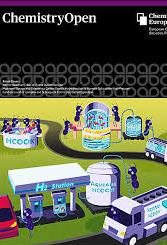
ChemistryOpen
Journal ISSN: 2191-1363
JCR: Q3
Impact Factor: 2.205


Articles
Evaluation of Multidentate Ligands Derived from Ethyl 1,2,4-triazine-3-carboxylate Building Blocks as Potential An(III)-Selective Extractants for Nuclear Reprocessing
Andrey V. Zaytsev, Petr Distler, Jan John, Andreas Wilden, Giuseppe Modolo, Mark Sims, Frank W. Lewis
First published: 26 November 2024 https://doi.org/10.1002/open.202400306
Analysis of Heavy Metal Accumulation in Ulva rigida and its Effects on Seed Germination of Pennisetum glaucum
Karungan Selvaraj Vijai Selvaraj, Rajiv Periakaruppan, Vanathi Palanimuthu, Valentin Romanovski, Ayyarappan Bharathi, Manu Mohan
First published: 28 January 2025 https://doi.org/10.1002/open.202400386
A Universal Method for the Synthesis of new Heterocyclic Systems: Pyrimido[2,1-f][1,2,4]triazines
Samvel N. Sirakanyan, Domenico Spinelli, Athina Geronikaki, Victor G. Kartsev, Elmira K. Hakobyan, Hasmik V. Jughetsyan, Hasmik A. Yegoryan, Anush A. Hovakimyan
First published: 31 January 2025 https://doi.org/10.1002/open.202400379
A Wearable Triboelectric Nanogenerator Based on Polyester-Paper Cloth for Mechanical Energy Harvesting and Running Motion Sensing
Xu Deng
First published: 29 November 2024 https://doi.org/10.1002/open.202400373
Measuring the Thermal Unfolding of Lysozyme: A Critical Comparison of Differential Scanning Fluorimetry and Differential Scanning Calorimetry
Weronika Malicka, Yueyue Dai, Andreas Herrmann, Rainer Haag, Matthias Ballauff, Marina Pigaleva, Thomas Risse, Daniel Lauster, Iman Asakereh, Mazdak Khajehpour
First published: 11 February 2025 https://doi.org/10.1002/open.202400340
Eco-Friendly Synthesis of Selenium Nanoparticles via Sternbergia candida: Enhancing Antioxidant Defense and Mitigating Salt Stress in Pepper (Capsicum annuum L.) Plants
Senem Kanber, Mahmut Yildiztekin, Mehmet Firat Baran
First published: 28 January 2025 https://doi.org/10.1002/open.202400341
Aerosol Assisted Chemical Vapour Deposition (AACVD) of Zinc dichalcogenoimidodiphosphinate Complexes for the Deposition of Zinc Selenide Thin Films
Dr. Temidayo Oyetunde, Martins O. Omorogie, Paul O’Brien
First published: 04 December 2024 https://doi.org/10.1002/open.202400295
Effects of Catalyst Synthesis Methods on the Physicochemical Properties of Silica-Supported Au–Ru Bimetallic Catalysts and their Influence on the Oxidation of Phenols with H2O2
Tumisang Lekgetho, Matshawandile Tukulula, Letlhogonolo Fortunate Mabena, Mabuatsela Virginia Maphoru
First published: 10 April 2025 https://doi.org/10.1002/open.202400484
Flexible Screen-Printed Electrochemical Sensor for Alkaline Phosphatase Detection in Biofluids for Biomedical Applications
Panagiota M. Kalligosfyri, Antonella Miglione, Alessia Esposito, Raghad Alhardan, Gabriella Iula, Iclal Atay, Ibrahim A. Darwish, Sevinc Kurbanoglu, Stefano Cinti
First published: 13 April 2025 https://doi.org/10.1002/open.202500113
In-Silico Exploration of the StreptomeDB Database for Potential Irreversible DprE1 Inhibitors toward Antitubercular Treatment
Doaa G. M. Mahmoud, Gamal A. H. Mekhemer, Mohamed-Elamir F. Hegazy, Jabir H. Al-Fahemi, Mahmoud A. A. Ibrahim
First published: 14 July 2025 https://doi.org/10.1002/open.202500237
Carbon Nanotube-Supported Mo, Ni, and Co Nitrides as Stable Catalysts for Levulinic Acid Conversion: Influence of Metal–Nitrogen Interactions and Confinement Effects
Ivet Pafian, Jorge Noé Díaz de León, Juan Seguel, Néstor Escalona, Gina Pecchi, Carla Herrera, Catherine Sepulveda
First published: 14 July 2025 https://doi.org/10.1002/open.202500291
Arenaria serpyllifolia as a Natural Antiviolaceum Agent: Phytochemical, Biological, and Molecular Approaches
Meryem Burcu Külahcı, Betül Aydın, Emine Incilay Torunoğlu, Zekeriya Düzgün, Alper Durmaz, Erdi Can Aytar
First published: 15 July 2025 https://doi.org/10.1002/open.202500236
Mercury Removal by Carbon Materials with Emphasis on the SO2–Porosity Relationship
Maria Antonia López-Antón, Lucia López-Toyos, Sara F. Villanueva, Elena Rodríguez, Roberto García, Maria Rosa Martínez-Tarazona, Ana Arenillas
First published: 15 July 2025 https://doi.org/10.1002/open.202500190
Introduction
ChemistryOpen is a multidisciplinary, gold-road open-access, international forum for the publication of outstanding Reviews, Full Papers, and Communications from all areas of chemistry and related fields. It is co-owned by 16 continental European Chemical Societies, who have banded together in the alliance called ChemPubSoc Europe for the purpose of publishing high-quality journals in the field of chemistry and its border disciplines.As some governments represented in ChemPubSoc Europe strongly recommend that research funded by them be freely accessible (Open Access), ChemistryOpen fills the gap as a journal that upholds ethical standards monitored by chemical societies. Based in Europe, ChemistryOpen attracts authors and readers worldwide. Reviews, Full Papers, and Communications are peer-reviewed, with electronic processing ensuring accurate reproduction of text and data, plus short publication times.
Editorial Board
Editor-in-Chief: Dr. Francesca Rita Novara
Editorial Board Chairs:
- Prof. Evamarie Hey-Hawkins (Leipzig University, Germany)
- Prof. Fahmi Himo (Uppsala University, Sweden)
- Prof. Jean-Marie Lehn (Nobel Laureate, France)
- Prof. Yan (China)
Aims & Scope
- Organic Chemistry: Studies on the structure, properties, and reactions of organic compounds.
- Inorganic Chemistry: Research involving inorganic and organometallic compounds.
- Physical Chemistry: Investigations into the physical properties and behavior of chemical systems.
- Analytical Chemistry: Development and application of analytical techniques and methodologies.
- Theoretical and Computational Chemistry: Theoretical models and computational simulations to understand chemical phenomena.
- Medicinal Chemistry: Design, synthesis, and development of pharmaceutical agents.
- Materials Chemistry: Creation and characterization of novel materials with specific functions.
- Nanochemistry: Chemical approaches to nanoscience and nanotechnology.
- Supramolecular Chemistry: Study of non-covalent interactions and molecular assemblies.
- Catalysis: Research on catalytic processes and catalyst development.
- Chemical Biology: Interdisciplinary studies at the interface of chemistry and biology.
- Electrochemistry: Exploration of chemical processes involving electron transfer.
- Environmental Chemistry: Chemical aspects of environmental processes and pollution.





Copyright © All rights reserved Designed and Developed by Digital Flavers
