
 info@apippress.com
 +86 18163351462 (WhatsApp)
 +86 182 8014 0209
Article Content
1. Introduction
In the current era of evolving global energy landscapes, sustainable energy supply and efficient utilization have become core issues for future human development. With the increasing depletion of traditional fossil fuels and the environmental pollution and climate change caused by their excessive use, countries worldwide are turning their attention to the development and utilization of renewable energy. A wave of transition to clean energy is sweeping the globe. Solar and wind energy, among other renewable sources, are inexhaustible and naturally advantageous, with their share in the energy supply system growing annually, making them the main drivers of energy structure adjustment. These renewable energies not only help reduce greenhouse gas emissions and mitigate global warming but also foster new economic growth points and create more employment opportunities. Additionally, as technology advances, the cost of renewable energy is gradually decreasing, making it more economically viable and attractive. Therefore, governments and enterprises are actively investing in renewable energy projects to secure a favorable position in the future energy market [1] [2] (Figure 1).

Figure 1. Proportion of renewable energy in electricity generation in recent years.
2. Performance Analysis of Supercapacitors and Batteries
2.1. Performance Limitations of Batteries
1) Deterioration in Low-Temperature Performance: In low-temperature environments, battery performance significantly declines. As temperatures drop, the viscosity of the electrolyte inside the battery increases, slowing in diffusion rates. According to the Nernst equation (1):
E=E0+(RT/nF)Lna(1)
(where E is the battery’s electromotive force, E0 is the standard electromotive force, R is the gas constant, T is the temperature, n is the number of electrons transferred in the reaction, F is Faraday’s constant, and a is the activity), both the electromotive force and reaction rate decrease, leading to reduced battery capacity. For example, in cold winters, vehicle batteries may fail to provide sufficient starting current, making it difficult to start the engine.
2) Limited Energy Density: Compared to some newer energy storage technologies, batteries have relatively low energy density. Energy density refers to the amount of energy stored per unit volume or mass of the battery. For hybrid electric vehicles, lower energy density means larger and heavier batteries are needed to meet range requirements. For instance, under the same range demand, batteries with low energy density may occupy more vehicle space and increase weight. According to Newton’s second law (2):
F=ma(2)
(where F is force, m is mass, and a is acceleration), increased vehicle weight requires more energy to overcome gravity and inertia during acceleration or climbing, reducing vehicle performance and energy efficiency.
3) Low Charge-Discharge Efficiency: During charging, electrical energy undergoes complex electrochemical reactions to convert into chemical energy for storage. However, this process is not entirely reversible, resulting in energy loss. For example, some electrical energy is dissipated as heat within the battery during charging and cannot be stored effectively. According to the law of energy conservation, the input of electrical energy equals the stored chemical energy plus the dissipated heat. The charge-discharge efficiency formula (3):
η=Eout/Ein(3)
( Eout is the output energy and Ein is the input energy) is reduced because is Eout less than Ein due to heat dissipation [3] (Figure 2).

Figure 2. Percentage decline in battery capacity at different temperatures.
2.2. Performance Advantages of Supercapacitors
1) High Capacitance: Supercapacitors use activated carbon powder and activated carbon fibers as polarizable electrodes, significantly increasing the contact area with the electrolyte. According to the capacitance formula (4):
C=εS/d(4)
(where C is capacitance, ε is the dielectric constant, S is the plate area, and d is the plate spacing), larger plate areas result in higher capacitance. Thus, the capacitance of double-layer capacitors can easily exceed 1F, with the maximum capacitance of a single supercapacitor currently reaching 5,000F, surpassing conventional capacitors by 3 – 4 orders of magnitude. This high capacitance is advantageous in applications requiring large energy storage, such as energy recovery systems in electric vehicles, where it can store braking energy quickly and provide support for subsequent acceleration or high-power demands.
2) Long Charge-Discharge Lifespan and High Discharge Current: Supercapacitors can endure up to 500,000 charge-discharge cycles or 90,000 hours, whereas batteries rarely exceed 1,000 cycles. For example, in urban buses with frequent starts and stops, supercapacitors can maintain performance over long-term cycling. They can also provide high discharge currents, such as 950A for a 2,700F supercapacitor, with peak currents reaching 1,680A. In contrast, batteries would suffer shortened lifespans under such high currents. Supercapacitors meet high-power demands in applications like electromagnetic catapult systems or rapid acceleration in electric vehicles.
3) Wide Operating Temperature Range and Material Safety: Supercapacitors operate between −40˚C and +70˚C, performing stably across a broad temperature range. Batteries struggle in extreme temperatures, especially in cold environments. Supercapacitors are also made from safe, non-toxic materials, unlike traditional batteries like lead-acid or nickel-cadmium, which pose environmental and health risks during use and disposal. This makes supercapacitors ideal for environmentally sensitive applications like indoor electronics or medical devices.
4) Rapid Charge-Discharge Capability: Supercapacitors can charge in seconds to minutes, whereas batteries would be dangerous or impractical to charge so quickly. This makes supercapacitors excellent for energy recovery and rapid energy replenishment. For example, in hybrid vehicles, they quickly absorb braking energy, improving recovery efficiency. In devices requiring frequent charge-discharge cycles, like laser pulse systems, supercapacitors can charge rapidly and deliver high-energy pulses [4]-[6].
2.3. Feasibility Analysis of Supercapacitors and Batteries in Parallel
1) Power Characteristic Complementarity: Hybrid vehicles face complex operating conditions. During acceleration or climbing, power demand spikes according to the formula (5):
P=Fv(5)
where greater traction force F is needed to increase speed or overcome resistance. Batteries, limited by electrode materials and electrochemical reactions, struggle to deliver high currents instantly, as shown by the high-rate discharge formula (6):
I=nFdqdt(6)
Supercapacitors, with their large plate area S and high capacitance C, can release large charges quickly per and, providing high currents for power demands. For example, during sudden acceleration, supercapacitors supplement power instantly. During braking, they absorb energy rapidly, compensating for slow battery charging. This parallel configuration ensures stable operation across varying conditions, enhancing performance [7].
2) Temperature Adaptability Synergy: Battery performance is highly temperature dependent. According to the Arrhenius equation (7):
K=Ae−EaRT(7)
Low temperatures reduce the reaction rate constant k, increasing internal resistance and reducing capacity, while high temperatures accelerate material degradation. Supercapacitors, with their wide operating range (−40˚C to +70˚C), remain stable. In cold environments, they support power output, easing battery load; in heat, they maintain functionality, ensuring system reliability in diverse conditions [8] [9].
3. Hybrid Energy Storage System Design
3.1. Basic Structure of Hybrid Energy Storage
The key components of the system include a battery bank, supercapacitor bank, and bidirectional DC/DC converter (Table 1). In the system architecture, the supercapacitor bank and battery bank are first connected to a bidirectional Buck/Boost converter before being connected to the DC busbar [10].
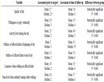
Table 1. Core modules of the hybrid energy storage system and their functions.
This design has significant advantages. On the one hand, it fully leverages the high-power density of supercapacitors, allowing them to respond rapidly to high-power demand scenarios and efficiently provide or absorb energy. On the other hand, by increasing the capacity of the energy storage unit (the battery pack), the hybrid energy storage system is ensured to have stronger energy storage capabilities, thereby ensuring the entire system operates flexibly and controllably. Whether under steady-state or dynamically changing conditions, it can work stably and reliably [11].
3.2. Capacity Ratio of Supercapacitors and Batteries
Supercapacitor capacity critically impacts system performance. If they are too small, they fail to meet high-power demands; if they are too large, they occupy excessive space and increase costs. Research suggests an optimal ratio is 10 – 20 times the battery capacity relative to the supercapacitor. This balance ensures rapid response from supercapacitors and sustained energy supply from batteries, optimizing performance, space, and cost [12].
3.3. Simulation of Hybrid Energy Storage with Supercapacitors and Batteries in Parallel
In standalone photovoltaic systems (Figure 3), hybrid energy storage with supercapacitors and batteries effectively suppresses power fluctuations using low-pass filters, ensuring precise energy management. The system employs single-loop constant-current control to regulate batteries and supercapacitors, maintaining stable operation [13] [14].

Figure 3. Application of hybrid energy storage system in grid energy storage.
SOC (State of Charge) zoning management divides supercapacitor operation into discharge limit, discharge warning, normal operation, charge warning, and charge limit zones. This approach adapts charging and discharging strategies to prolong system lifespan and optimize performance.
Using Advisor software simulation, a comparative analysis of battery SOC changes was conducted under mixed energy storage and single energy storage conditions in the same classic scenario. As shown in Figure 4, it can be seen that under single energy storage, the battery’s SOC decreases rapidly, while under mixed energy storage, the decrease in battery SOC is significantly slower, outperforming single energy storage. This is because in mixed energy storage, the addition of supercapacitors can effectively share the discharge burden of the battery, reducing the discharge pressure on the battery [15]-[17].

Figure 4. Comparison of battery SOC between mixed energy storage and single energy storage.
To more intuitively demonstrate the protective effect of mixed energy storage on batteries, a further comparisor was made of the battery current curves in mixed energy storage and single energy storage. Figure 5 shows the battery current curves in mixed energy storage and single energy storage. It can be seen that the battery current in mixed energy storage is basically around 50 A, while the current in single energy storage is significantly highel. High-rate currents inevitably have a greater impact on the lifespan of batteries in single energy storage, potentially posing safety hazards. In contrast, in mixed energy storage systems, supercapacitors can undertake the task of high-rate current charge and discharge, thereby reducing the charge and discharge current of the battery, effectively extending its lifespan, and improving the overall power system’s safety [18][19].

Figure 5. Comparison of current between mixed energy storage and single energy storage.
The system uses three-phase inverter technology to convert DC to AC for grid integration. Voltage and current dual-loop PI (Proportional Integral) control ensures stable, high-quality AC output. PWM (Pulse Width Modulation) drives the inverter’s power switches, enabling precise regulation and seamless grid connection [20].
4. Conclusion
The parallel hybrid energy storage of supercapacitors and batteries holds significant value in renewable energy development. Theoretically, their complementary power, charge-discharge, and temperature adaptability characteristics are evident. Supercapacitors’ high power and rapid response compensate for battery shortcomings, while batteries’ higher energy density ensures endurance. In practice, this hybrid system excels, such as in hybrid vehicles, where supercapacitors enhance energy recovery and reduce losses during urban driving. However, challenges like high supercapacitor costs, control strategy optimization, and performance improvements remain. Despite these hurdles, the technology’s future is promising. With advancements, costs may decrease, and performance will rise, enabling widespread application across fields and contributing to efficient, sustainable energy development.
Acknowledgements
The authors acknowledge the Tianchi Talent Project of Xinjiang Uygur Autono-mous Region (grant no. CZ000914, CZ000901), the Start-up Project of Shihezi University (grant no. RCZK202323), International Cooperation Project of Shihezi University (GJHZ202408) and the K.C.Wong Education Foundation (FZ0013), Hong Kong.
Conflicts of Interest
The authors declare no conflicts of interest regarding the publication of this paper.
References
| [1] | Wang, L.M. (2015) Research on Hybrid Energy Storage Systems in Wind Power Grids. North China Electric Power University. |
| [2] | International Energy Agency (IEA) (2020) Energy Storage Technology Roadmap: Focus on Arid Regions. IEA Publications. |
| [3] | Fang, W.X., Wu, S. and Zong, Y. (2005) Improvement of Hybrid Electric Buses Using Supercapacitors and Batteries in Parallel. Bus Technology and Research, No. 5, 11-14. |
| [4] | Hui, Z., An, J., Zhou, J., Huang, W. and Sun, G. (2022) Mechanisms for Self-Templating Design of Micro/Nanostructures toward Efficient Energy Storage. Exploration, 2, Article ID: 20210237. https://doi.org/10.1002/exp.20210237 |
| [5] | Song, H., Wang, Y., Fei, Q., Nguyen, D.H., Zhang, C. and Liu, T. (2022) Cryopolymerization-Enabled Self-Wrinkled Polyaniline-Based Hydrogels for Highly Stretchable All-in-One Supercapacitors. Exploration, 2, Article ID: 20220006. https://doi.org/10.1002/exp.20220006 |
| [6] | Wang, T., Wang, Y., Lei, J., Chen, K. and Wang, H. (2021) Electrochemically Induced Surface Reconstruction of Ni-Co Oxide Nanosheet Arrays for Hybrid Supercapacitors. Exploration, 1, Article ID: 20210178. https://doi.org/10.1002/exp.20210178 |
| [7] | Troschke, E., Oschatz, M. and Ilic, I.K. (2021) Schiff-Bases for Sustainable Battery and Supercapacitor Electrodes. Exploration, 1, Article ID: 20210128. https://doi.org/10.1002/exp.20210128 |
| [8] | Zhang, J.B. (2023) Research on Supercapacitor-Battery Hybrid Energy Storage DC Systems in Substations. Kunming University of Science and Technology. |
| [9] | Smith, J., Zhang, L., et al. (2021) Supercapacitor-Based Energy Storage Systems for Remote Renewable Integration: Case Studies in Northwest China. Renewable Energy, 178, 1205-1216. |
| [10] | Qiao, L.B., Zhang, X.H., Sun, X.Z., Zhang, X. and Ma, Y.W. (2022) Research Progress on Battery-Supercapacitor Hybrid Energy Storage Systems. Energy Storage Science and Technology, 11, 98-106. |
| [11] | Quan, W.G. (2024) Research on Hybrid Energy Storage with Supercapacitors and Batteries in Standalone Photovoltaic Systems. China High-Tech, No. 22, 83-85. |
| [12] | Chen, Y.F. and Zhou, L.L. (2016) Modeling and Control of Photovoltaic-Supercapacitor Hybrid System. Electric Power Construction, 37, 91-98. |
| [13] | Yang, Y.Q. (2021) Research on Hybrid Energy Storage System of Supercapacitors Based on Microgrid. Anhui University of Science and Technology. |
| [14] | Zhang, J.H., Hao, H.D., Tian, Y., et al. (2017) Adaptive Control of Photovoltaic System with Supercapacitor Energy Storage. Process Automation Instrumentation, 38, 12-14+19. |
| [15] | Zhu, Z.Y. (2017) Control Strategy and Simulation Research of Photovoltaic System Based on Supercapacitor-Battery Energy Storage. Shandong University. |
| [16] | Cai, G.W., Chen, C., Kong, L.G., et al. (2016) Modeling and Control of Grid-Connected System with Wind Power/Photovoltaic/Hydrogen Production/Supercapacitor. Power System Technology, 40, 2982-2990. |
| [17] | Tian, B., Xie, Z., Chen, L., Hao, S., Liu, Y., Feng, G., et al. (2023) Ultralow-Power Inmemory Computing Based on Ferroelectric Memcapacitor Network. Exploration, 3, Article ID: 20220126. https://doi.org/10.1002/exp.20220126 |
| [18] | Qiao, L.B., Zhang, X.H., Sun, X.Z., et al. (2022) Research Progress on Battery-Supercapacitor Hybrid Energy Storage Systems. Energy Storage Science and Technology, 11, 98-106. |
| [19] | Xu, M., Liu, Y., Yang, K., Li, S., Wang, M., Wang, J., et al. (2023) Minimally Invasive Power Sources for Implantable Electronics. Exploration, 4, Article ID: 20220106. https://doi.org/10.1002/exp.20220106 |
| [20] | Pan, L. (2016) Application Research of Solar Photovoltaic Power Generation System Based on Supercapacitor Energy Storage. East China Jiaotong University. |
