
Journal Stats
- Research Direction: Earth Science
- Sci Category: SCIE
 info@apippress.com
 +86 18163351462 (WhatsApp)
 +86 182 8014 0209
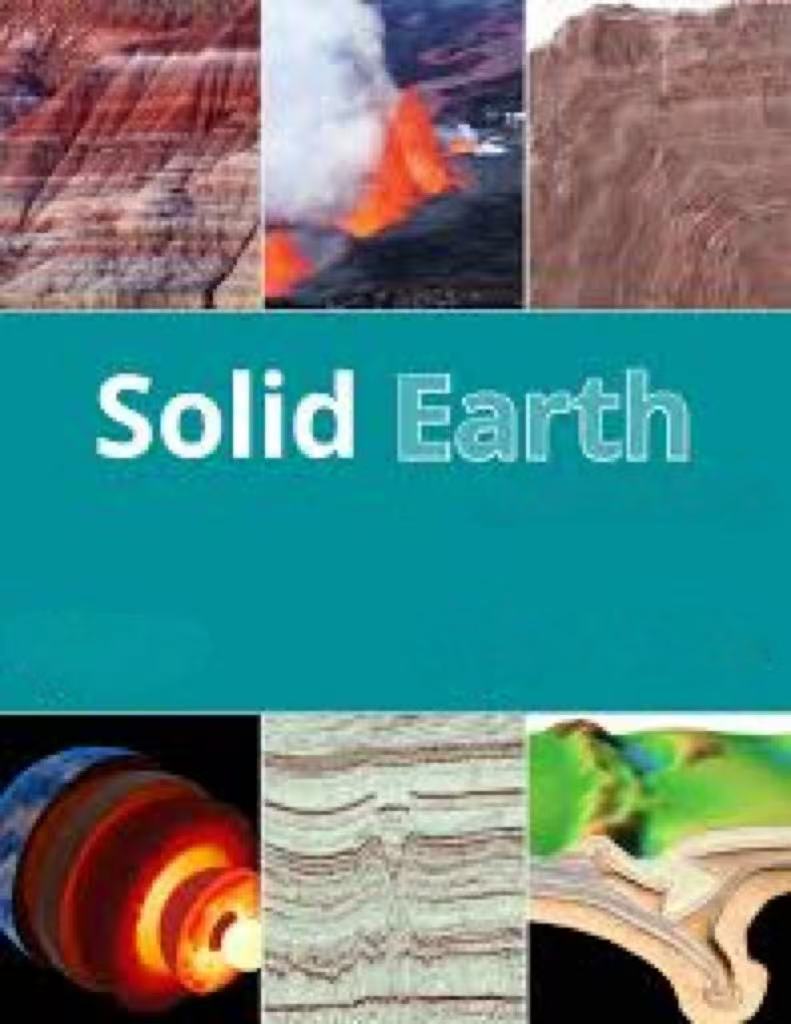
Solid Earth
Journal ISSN: 1869-9510
JCR: Q2
Impact Factor: 2.38


Articles
What do arc magmatism trace-element patterns and Sr–Nd–Pb isotopic data reflect? Insights from the Urumieh–Dokhtar magmatic arc of Iran
Mohammad Reza Ghorbani1 , Meysam Akbari, Ian T. Graham , Mathieu Benoit, and Fatemeh Sepidbar
Published:14 July 2025
Doi:https://doi.org/10.1007/s11019-025-10281-8
The size distributions of fractures and earthquakes: implications for orogen-internal seismogenic deformation
Sandro Truttmann , Tobias Diehl , Marco Herwegh, and Stefan Wieme
Published:14 July 2025
Doi:https://doi.org/10.1007/s11019-025-10281-8
Introduction
Solid Earth (SE) publishes multidisciplinary research on the composition, structure, and dynamics of the Earth from the surface to the deep interior at all spatial and temporal scales.
Editorial Board
Editor-in-Chief:
Charlotte Krawczyk – GFZ Helmholtz Centre for Geosciences, Germany
Executive Editor:
Susanne Buiter – GFZ Helmholtz Centre for Geosciences, Germany
Andrea Di Muro – Claude Bernard University Lyon 1, France
Florian Fusseis – RWTH Aachen University, Germany
Kei Ogata – University of Genoa, Italy
Federico Rossetti – University of Rome Tre, Italy
Arjen Stroeven – Stockholm University, Sweden
Deputy Editors (partial):
Irene Bianchi – National Institute of Geophysics and Volcanology (INGV), Italy
Yang Chu – University of Science and Technology of China
Nicolas Gillet – Grenoble Alpes University, France
Philip Heron – University of Toronto, Canada
Johan Lissenberg – Cardiff University, UK
Michal Malinowski – Institute of Geophysics, Polish Academy of Sciences, Poland
Patrice Rey – University of Sydney, Australia
Stefano Tavani – Federico II, University of Naples, Italy
Ulrike Werban – GFZ Helmholtz Centre for Geosciences, Germany
Aims & Scope
- Tectonics and structural geology: study of deformation processes, mountain building, and plate tectonics.
- Geophysics: includes seismology, gravimetry, magnetism, and geophysical imaging of the crust and mantle.
- Geodynamics: modeling and interpretation of large-scale Earth processes such as mantle convection, lithospheric dynamics, and subduction.
- Petrology and geochemistry: study of rock formation, metamorphic processes, geochemical cycles, and mineral composition.
- Geomorphology: evolution and modeling of landscapes, erosional processes, and sediment transport.
- Volcanology: processes related to magma generation, eruption dynamics, and volcanic hazards.
- Geochronology: dating and timescale constraints on geological processes.
- Paleomagnetism and rock magnetism: study of the magnetism of rocks and the Earth’s past magnetic field.
- Natural hazards: risk assessment and monitoring of earthquakes, landslides, and volcanoes.
- Methodological advances: innovations in data processing, modeling, and geophysical and geological instrumentation.



Copyright © All rights reserved Designed and Developed by Digital Flavers
